Service explainers · Metro Manila & nearby provinces
Septic Tank Siphoning vs Drain Declogging: Which Do You Need?
A slow drain does not always mean a full septic tank. Understand the difference between pumping, clearing a blockage and repairing a plumbing fault.
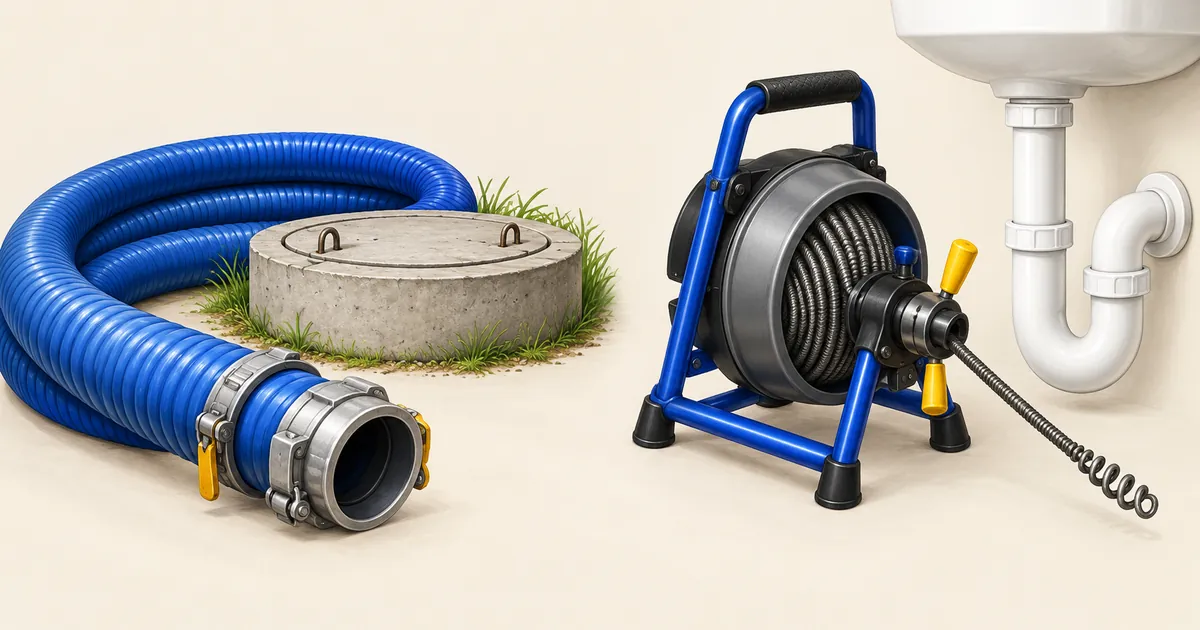
Siphoning removes contents from a septic tank. Declogging clears an obstruction in a drain or pipe. They address different problems, although a property can need both. Booking the service that sounds most familiar may leave the actual fault unresolved.
For homes and properties in Metro Manila, Central Luzon and Calabarzon, the useful starting point is a description of the symptoms. Lowest Price Malabanan offers both services and can assess what the job requires before quoting for the work.
What does septic tank siphoning do?
Septic tank siphoning, also called pumping or desludging, removes accumulated contents from a septic tank. It is relevant to properties that use a septic system. It should not be assumed to be the answer for every slow toilet or sink.
Siphoning does not by itself repair a broken pipe, change a poor pipe layout or clear every separate blockage in the property’s drains. If a drainage problem remains after pumping, the connected pipework or another part of the system may need assessment.
When asking about siphoning, share the tank location, last known service date and whether the access cover is reachable. If you do not know whether your building uses a septic tank or a shared wastewater system, ask the owner or property manager.
What does drain declogging do?
Drain declogging targets a blocked toilet, sink, floor drain or water passage. The method depends on the location and condition of the obstruction and the pipework. An assessment helps establish where the blockage may be and how to approach it.
For example, a kitchen sink that drains slowly while the rest of the house works normally points the inspection toward that fixture and its drain. This is a clue, not proof of a particular cause. Several fixtures backing up can require a broader check of shared lines and downstream connections.
The equipment in the illustration represents the different tasks: a substantial hose for pumping and a drain machine for working on a pipe blockage. The team chooses equipment after considering the actual job.
Compare the symptoms without guessing the diagnosis
| What you notice | What to tell the team |
|---|---|
| One sink drains slowly | Which sink, how long it has happened and whether nearby fixtures work normally |
| A toilet backs up repeatedly | When the water rises, what else is being used and any earlier clearing attempts |
| Several drains are affected | Which fixtures, whether the issue started together and whether the property has a septic tank |
| The problem returns after pumping | The pumping date, what was done and whether the symptom improved at all |
| A visible pipe or fitting leaks | The exact location, when it leaks and whether it is safe to stop using the fixture |
A photo can help communicate the location, but it does not replace an inspection. Do not open a tank or remove fittings just to take a better picture.
When is plumbing repair the next step?
A damaged fitting, leak or pipe defect may require a plumbing repair. Clearing an obstruction may restore flow temporarily while leaving a separate physical fault. Ask the team to explain whether they found a blockage, damage or both.
This distinction matters when you approve a quote. “Clear this drain” and “replace this section of pipe” are different scopes. If repair work becomes necessary after the initial assessment, agree on the work and cost before it starts.
For a condominium, involve building management if the affected pipe belongs to a shared system. Our Makati service guide explains the access and coordination questions that are especially useful for building occupants.
What should you do before the visit?
Stop using fixtures that cause a backup, keep people away from wastewater and tell the team about any chemical drain products already used. Keep septic covers closed and never enter a tank. Avoid repeated flushing to test a toilet that is already overflowing.
Gather your address, a short symptom history and any records of earlier work. For a house with a tank, our Bulacan preparation checklist explains what to arrange around the access point and vehicle route.
Ask for an assessment, not a guess
You can simply say: “I am not sure whether I need siphoning or declogging. Here is what is happening.” Lowest Price Malabanan offers a free visit and estimate, so the proposed work can be discussed before you commit.
Call 0915 150 1556 or request an estimate. We serve Metro Manila, Central Luzon and Calabarzon and are available 24/7. Share the location and urgency so we can confirm the visit arrangements.